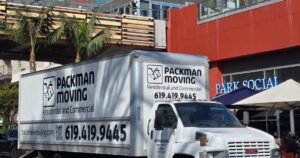
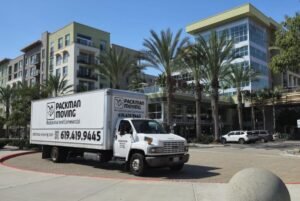
How do you check whether a San Diego moving company is licensed? Search the company’s name or permit number in California’s official household mover database at search.dca.ca.gov/hhm_search. It is free, it takes about thirty seconds, and it is the only answer that counts. If a moving company does not appear in that database, it is not licensed to move household goods in California — whatever its website, its truck or its Google listing says.
Packman Moving LLC operates under household mover permit MTR-0192735. Please verify it. Then verify every other mover you are considering, because the ones who object to being checked are telling you something.
Who actually regulates moving companies in California?
The Bureau of Household Goods and Services (BHGS), part of the California Department of Consumer Affairs, licenses and regulates household movers in this state.
This is where almost every other article on this subject is wrong, including some published by moving companies. Household movers were regulated by the California Public Utilities Commission (CPUC) until July 1, 2018, when Senate Bill 19 moved that authority to the BHGS. The CPUC no longer regulates household movers at all.
The permit numbers carried over, which is why you still see movers across California — us included, until we corrected it — describing an MTR number as a “CAL-P.U.C.” number. The number is genuine. The regulator named beside it is eight years out of date. If you are checking a mover today, check the BHGS database, not the CPUC.
How do I look up a San Diego mover’s license?
Five steps, start to finish:
- Go to search.dca.ca.gov/hhm_search, the Department of Consumer Affairs license search for household movers.
- Search by business name or by permit number if the company publishes one. Searching by number is more reliable, because business names are often similar.
- Check that the legal business name matches the company quoting you. A quote from “SD Budget Movers” against a permit held by a differently named LLC is a problem worth asking about.
- Check the license status. You want it current and clear, not expired, suspended or lapsed.
- If nothing comes up, stop. An unlicensed mover is not a cheaper version of a licensed one. It is a different product with no regulator behind it.
Do this before you pay a deposit, not after. Once a company has your money and a date in the calendar, your leverage is gone.
What is an MTR number, and how is it different from a USDOT number?
Movers carry different numbers for different jobs, and companies sometimes show you whichever one they have rather than the one that applies to your move.
| Number | Who issues it | What it covers |
|---|---|---|
| MTR (e.g. MTR-0192735) | California BHGS | Moving household goods within California. This is the one that matters for a move inside San Diego County, such as San Diego to Carlsbad. |
| USDOT | Federal Motor Carrier Safety Administration | Interstate moves — crossing a state line. A San Diego to Phoenix move needs this. |
| MC number | Federal Motor Carrier Safety Administration | Interstate operating authority, usually alongside a USDOT number. |
The practical point: a USDOT number alone does not make a company legal to move you within California. If you are moving from Pacific Beach to Poway and the company shows you only a USDOT number, ask for the household mover permit. If you are moving out of state, you want to see the federal registration too.
What must a licensed California mover give you before the move?
If you hire a mover three or more days before your move date, California requires them to provide specific paperwork. Missing documents are one of the clearest signals you are dealing with someone operating outside the rules.
- A written moving services agreement.
- The “Important Notice About Your Move” document.
- The BHGS booklet “Important Information for Persons Moving Household Goods (within California)”.
- A written estimate — and the estimate must come after someone has actually looked at what you are moving.
- A “Not to Exceed” price, which caps what you can be charged.
That last one is worth dwelling on. A “Not to Exceed” figure is a ceiling, not a guess. It is the protection that stops a move becoming more expensive once your belongings are already on a truck — which is the single most common way people get hurt by a bad mover.
What are the warning signs of an unlicensed mover?
Most of these show up before anyone touches your furniture:
- A firm price without seeing your home. California requires an inspection before a written estimate. A number quoted from a two-minute phone call or a web form is not an estimate in any sense the law recognizes.
- A verbal estimate only. If it is not in writing, it does not exist.
- No permit number anywhere — not on the website, not on the paperwork, not when you ask directly.
- A large cash deposit demanded up front, particularly cash or a payment app rather than a traceable method.
- No physical address, or an address that turns out to be a mailbox.
- An unmarked rental truck arriving on the day when you were quoted by a company with its own fleet.
- Reluctance when you ask to verify the license. A legitimate mover will give you the number without hesitating. We just gave you ours.
Why does licensing actually matter?
Because it decides what happens when something goes wrong.
A licensed mover carries required insurance, has to give you the documents above, is bound by the “Not to Exceed” price, and answers to a regulator you can complain to. An unlicensed operator has none of that. If your things are damaged, held hostage against a higher price, or simply never arrive, your realistic options narrow to small claims court and hope.
The saving is rarely worth it. The gap between a licensed and unlicensed crew on a typical San Diego apartment move is usually a couple of hundred dollars. The downside is everything you own.
What do I do if a mover has already taken my money?
File a complaint with the Bureau of Household Goods and Services. The BHGS takes consumer complaints against household movers through an online form or a downloadable PDF at bhgs.dca.ca.gov/consumers, and it is the body with actual authority over licensed movers in California.
Before you file, gather what you have: the written agreement, any estimate, your inventory, payment records, and photographs of the damage or of the items in question. Complaints supported by documents go further than complaints that rely on recollection.
How do I verify Packman’s license?
Packman Moving LLC is a licensed and insured San Diego moving company operating under household mover permit MTR-0192735. We are based at 3025 1/2 J St, San Diego, CA 92102, and we move households across San Diego County — local moves, long-distance moves, appliance moving, military PCS and PPM moves, packing, and storage.
If you want to know what a move should cost before you start calling companies, our San Diego moving cost guide publishes real 2026 rates by home size. And if you want the wider version of this article, how to spot and avoid a moving scam covers the tactics that show up after the license check.
Published 11 September 2026, reviewed 16 September 2026. Fees, required documents and license status change — verify any mover, including us, at search.dca.ca.gov/hhm_search before you book.
Frequently Asked Questions
How do I check if a San Diego moving company is licensed?
Search the company’s name or permit number at search.dca.ca.gov/hhm_search, the California Department of Consumer Affairs license database for household movers. It is free and takes about thirty seconds. Check that the legal business name matches the company quoting you and that the license status is current. If the company does not appear, it is not licensed to move household goods in California.
Who regulates moving companies in California?
The Bureau of Household Goods and Services (BHGS), part of the California Department of Consumer Affairs. Household movers were regulated by the California Public Utilities Commission until July 1, 2018, when Senate Bill 19 transferred that authority to the BHGS. The CPUC no longer regulates household movers, which is why any article telling you to check with the CPUC is out of date.
Is Packman Moving licensed and insured?
Yes. Packman Moving LLC operates under California household mover permit MTR-0192735 and carries the insurance required of licensed movers. You can verify the permit yourself at search.dca.ca.gov/hhm_search, and we would encourage you to check us the same way you check anyone else.
What is an MTR number?
An MTR number is the permit a company needs to move household goods within California. It is the number that matters for a move inside the state, such as San Diego to Carlsbad. Packman Moving’s is MTR-0192735. Many movers still describe it as a CAL-P.U.C. number because the CPUC issued these permits before July 2018; the number is the same, but the regulator is now the BHGS.
Is a USDOT number enough to move me within California?
No. A USDOT number is federal registration for interstate moves, so it applies when you cross a state line. Moving within California requires a state household mover permit. If a company shows you only a USDOT number for a move from San Diego to Poway, ask for the household mover permit number as well.
Can a mover give me a price without seeing my home?
Not a binding one. California requires a written estimate to be based on an inspection of the goods being moved, whether in person or by video survey. A firm price quoted from a short phone call or a web form is a warning sign, not a bargain, and it is one of the clearest markers of a company operating outside the rules.
What paperwork should a licensed California mover give me?
If you book three or more days ahead, a licensed mover must give you a written moving services agreement, the Important Notice About Your Move document, the BHGS booklet Important Information for Persons Moving Household Goods (within California), a written estimate made after inspecting your goods, and a Not to Exceed price that caps what you can be charged.
What should I do if I have a problem with a moving company?
File a complaint with the Bureau of Household Goods and Services at bhgs.dca.ca.gov/consumers, using either the online form or the downloadable PDF. Gather your written agreement, estimate, inventory, payment records and photographs first – complaints backed by documents carry further than those relying on memory.