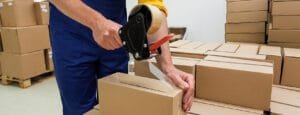
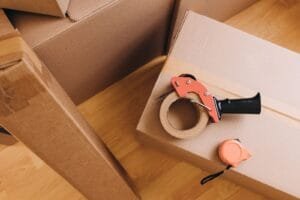
What is the best way to pack a kitchen for moving? Start early, pack the things you rarely use first, wrap every dish and glass on its own, and pack plates on their edges rather than flat. The kitchen holds more fragile items than any other room, which is why it takes the longest to pack and causes the most breakage claims when it is rushed. If you would rather skip it, our kitchen packing services handle the whole room for you. If you are doing it yourself, this guide walks you through it the way our crews do it, from supplies to the box you open first at your new home.
Packman Moving has completed 3,500+ moves across San Diego County since 2022, and nearly every one of them included a kitchen. These are the methods our packers use every day.
Supplies You Need to Pack a Kitchen
Gather everything before you start, so you are not hunting for tape with a stack of plates in your hands. A good kitchen packing list includes:
- Small and medium boxes. Kitchen items are heavy, so keep boxes small enough to lift safely. Save large boxes for light items like dish towels and plastic containers.
- Dish pack boxes. These double-walled cartons are made for plates, bowls and glassware.
- Cell dividers for glasses and stemware.
- Packing paper. Plain, unprinted paper will not leave ink on your dishes.
- Bubble wrap for stemware, ceramics and anything with a handle or thin edge.
- Packing tape and a marker for sealing and labeling.
- Zip-top bags for small parts, appliance cords and open spices.
Need boxes and wrap? You can get everything in one place from our moving boxes and supplies service.
What to Pack First (and Last)
Pack your kitchen in stages so you can still cook until the last few days.
- First: items you rarely use, such as serving platters, holiday dishes, specialty bakeware, extra glassware, cookbooks and small appliances you can live without.
- Next: most of your everyday dishes, pots and utensils. Keep out one plate, bowl, mug and set of utensils per person.
- Last: the items you use daily, plus anything going into your first-night kitchen box.
Use up pantry and freezer food in the weeks before your move, and plan simple meals for the final days so there is less to pack and less to throw away.
How to Pack Dishes and Glasses
Dishes and glasses break when they move inside the box. The goal is to wrap each piece and pack the box tight so nothing can shift.
- Line the box first. Put a layer of crumpled packing paper in the bottom to absorb shock.
- Wrap plates one at a time in packing paper, then bundle a few wrapped plates together.
- Stand plates on their edges, like records in a crate. Plates packed upright are much less likely to crack than plates stacked flat.
- Nest bowls with paper between each one, then wrap the stack.
- Pack glasses in cell dividers, rim down, with each glass wrapped. Stuff paper inside cups and stemware for support.
- Fill every gap with crumpled paper. If you can hear anything move when you gently tilt the box, add more.
- Put heavy items at the bottom and lighter ones on top, and keep each box to a weight you can lift.
- Label the box “Kitchen, Fragile, This Side Up” on the top and at least one side.
How to Pack Pots, Pans and Small Appliances
Pots and pans are sturdy but heavy. Nest them by size with a sheet of paper between each one, and wrap the lids separately so they do not scratch or chip. Pack knives in a knife block or wrap each blade in thick paper or cardboard and tape it closed, then label the bundle so no one grabs it by surprise.
For small appliances such as toasters, coffee makers, blenders and stand mixers, clean and dry each one first. Use the original box if you still have it. If not, remove loose parts like blades and carafes, wrap them separately, tape the cord to the appliance, and pad the box well. Keep the appliance and its parts in the same box so nothing goes missing.
Large appliances are a different job. For refrigerators, washers and other big units, follow our guide on how to move appliances safely in San Diego.
Pantry Food and Fridge Items
Movers will not carry perishable food, and San Diego heat inside a moving truck spoils it quickly. Sealed, shelf-stable pantry goods, such as canned food, unopened rice, pasta and spices, are fine and pack like anything else. Our list of what San Diego movers won’t move covers the full rules.
- Pack canned and dry goods in small boxes, since they get heavy fast.
- Tape open boxes of dry food shut and put open spices and sauces in zip-top bags.
- Move perishable food and frozen items yourself in a cooler, or give them to friends, neighbors or a local food bank before moving day.
- Empty, clean and dry the fridge before the move, and leave the doors open so it can air out.
Your First-Night Kitchen Box
Pack one clearly labeled box with everything you need for the first day and night in your new home. Load it last or take it in your car so it is the first thing you open.
- One plate, bowl, mug and set of utensils per person
- A pot, a pan and a cooking utensil
- A sharp knife and a small cutting board
- Dish soap, a sponge and a couple of dish towels
- Paper towels, trash bags and a few zip-top bags
- Coffee or tea, snacks and bottled water
- A can opener and bottle opener
- Basic cleaning spray for wiping down cabinets before you unpack
When to Hire Kitchen Packing Help
The kitchen is the room most people hand to a professional crew, even when they pack the rest of the home themselves. It makes sense to get help when:
- You own a lot of glassware, china or heirloom dishes
- Your move date is close and the kitchen is still full
- You have a large kitchen, a butler’s pantry or a garage full of extra cookware
- You want breakage risk kept as low as possible
Packing only the kitchen and fragile items is a common version of partial packing. Compare it with packing the whole home in our guide to full vs partial packing, and see what to budget in our breakdown of packing services costs in San Diego. When you are ready, request a free quote and tell us you would like the kitchen packed.
FAQs
How long does it take to pack a kitchen?
Longer than most people expect. The kitchen usually takes more time than any other room because nearly everything needs to be wrapped one piece at a time. Start with rarely used items at least a week before moving day and work through the room in stages. A professional crew packs a kitchen much faster because it brings the right boxes and wraps everything as it goes.
How do you pack plates so they don’t break?
Wrap each plate in packing paper, bundle a few together, and stand them on their edges in a dish pack or small sturdy box with crumpled paper on the bottom. Fill every gap so the plates cannot shift, and mark the box as fragile. Packing plates on their edges instead of flat is the single biggest way to prevent breakage.
Can movers move food?
Movers can move sealed, shelf-stable food like canned goods, unopened pasta and spices. They will not move perishable or frozen food, because it can spoil in the truck and the mover is not responsible for it. Plan to use it up, give it away or carry it yourself in a cooler. See what San Diego movers won’t move for the full list.